(located at Vermilion County Courthouse)
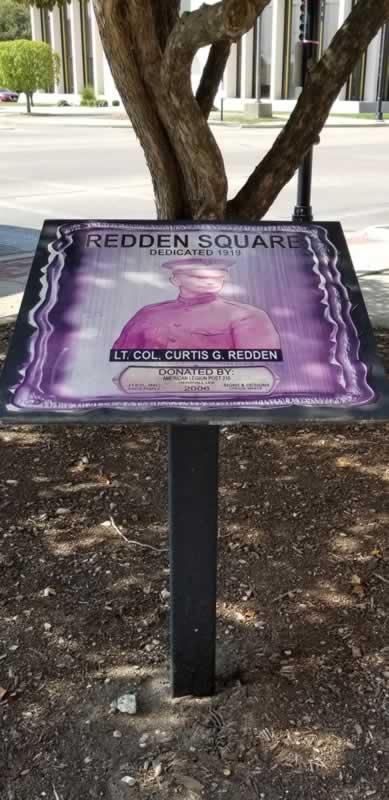
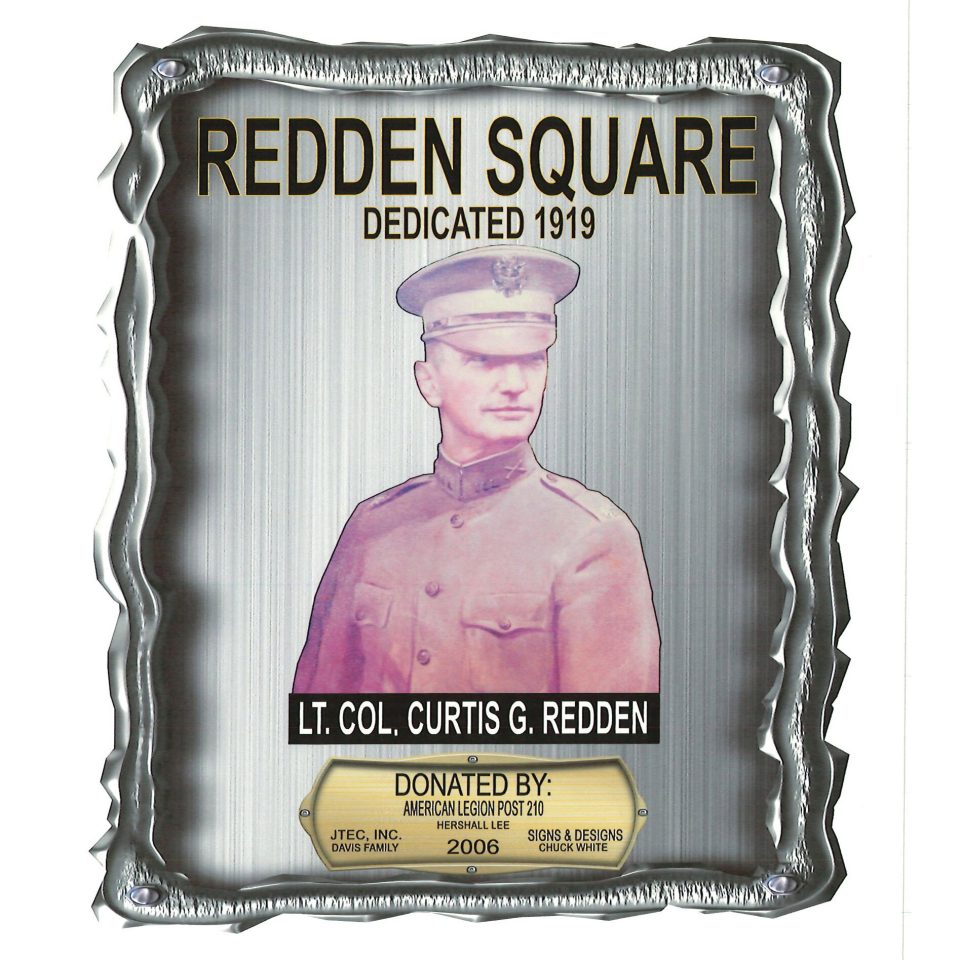
Honors Danville native Lt. Col. Curtis G. Redden
Curtis G. Redden, whose life ended in World War I, was born on his father’s farm near Rossville in 1881. His parents were William B. and Catherine Anderson Redde, both natives of Fountain County, Indiana. His grandfather, John, had settled on a fram near Rossville in 1860. William, reared on the farm, wanted an education, hoping to become a lawyer. He obtained some law books and, while not working, studied them by himself and was admitted to the bar.
Curtis enlisted, while he was still in high school, for service in the Spanish American War as a private in Battery A, Illinois National Guaard. He later returned to Rossville and graduated from high school in 1899. Then entered the University of Michigan to prepare himself for his father’s profession.
In 1902 Redden, then a sophomore, played in the first Rose Bowl game, in which Michigan soudly defeated Leland Standford, 49-0.
Coaching was at the time a seasonal thing, and, after his stint as a player was over, Redden helped finance the law practice he was establishing in Danville by coaching. He was head coach one season at the University of Kentucky, baseball coach in Indianapolis, and then baseball and football coach at Know College in Galesburg. He was an assistant to Yost at Michigan 1909-1912, serving just during the season.
On June 1, 1910, Curtis Redden married Loyette Pankey. They had three children.
Although Curtis G. Redden had been a member of Battery A in the Spanish War and was a veteran of the Puerto Rico invasion of 1898, he had not remained in the army. By 1916, he was a prominent member of the Danville Bar. But the Battery was experiencing a death of officers, so he was persuaded to reenlist as a second lieutenant. As vacancies occurred in the ranks above him, he was advanced; in the spring of 196, the now Captain Curtis G. Redden received orders to mobilize his Battery for service on the Mexican border. By the time war was declared in April 1917, Redden had become a major and was assigned command of the Second Battalion. In 1917, Battery A, with Capt. Redden in commance, left for Fort Sheridan, where it became a part of the 149th Field Artillery. While stationed there Redden became a captain. They embarked for France in October 1917.
He led his battalion through some fo the fiercest fighting on the western fromt and was promoted to the rank of Lieutenant Colonel and given command of the 149th Field Artillery Regiment. Them came the end of the war, bue even as there was rejoicing, sorrow came. Colonel Curtis G. Redden succumbed to pneumonia on January 16, 1919, in a field hospital at Bad Neuenahr. He was temporarily interred at Coblence; the body was later brought back to Danville and buried in Springhill Cemetery.
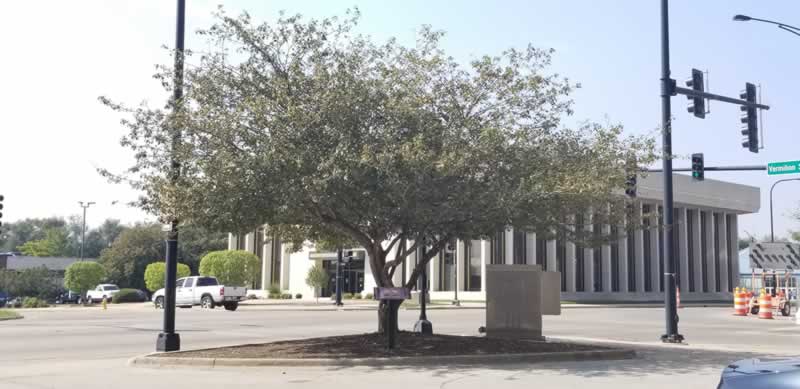
The heart of downtown Danville, where Vermilion crosses Main, was named Redden Square in his honor.
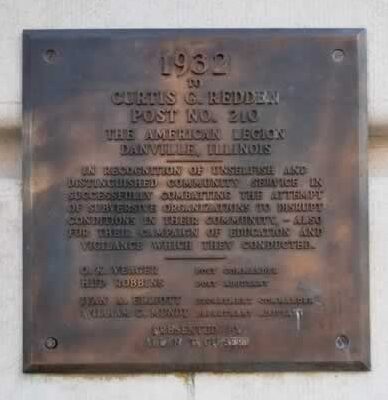
Small tree and plaque in the corner, bronze plaque on the west courthouse wall.